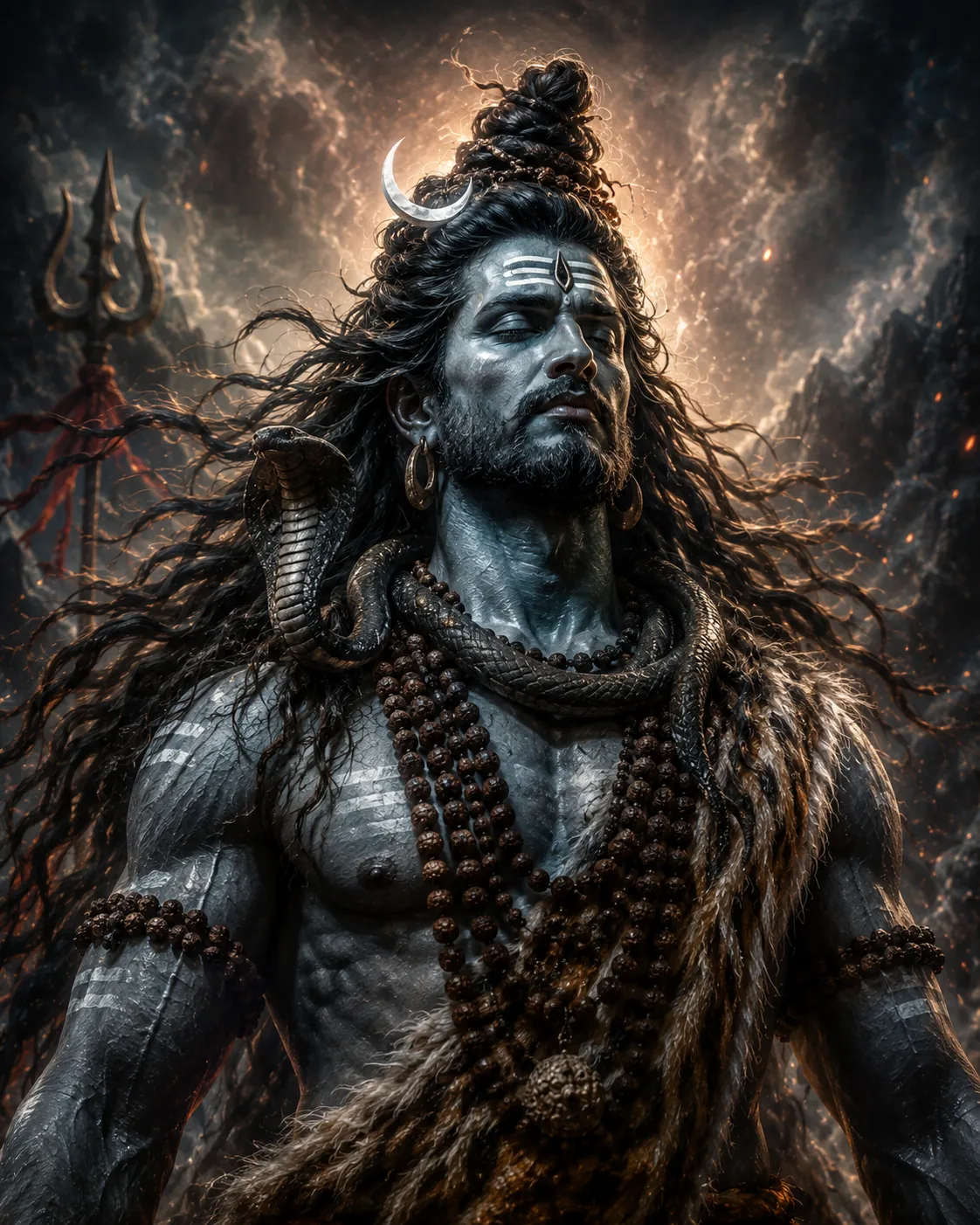
Shiva Poojas

Rudrabhishek Pooja

A sacred Vedic ritual dedicated to Lord Shiva, where the Shiva Lingam is ceremonially bathed while sacred mantras are recited. Discover its meaning, significance, vidhi, benefits, samagri and the traditions surrounding Rudrabhishek.

Book Rudrabhishek Pooja at Home Soon Book Rudrabhishek Pooja Online Soon
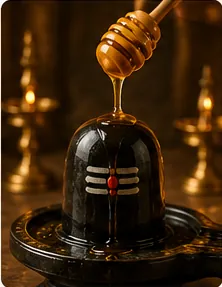
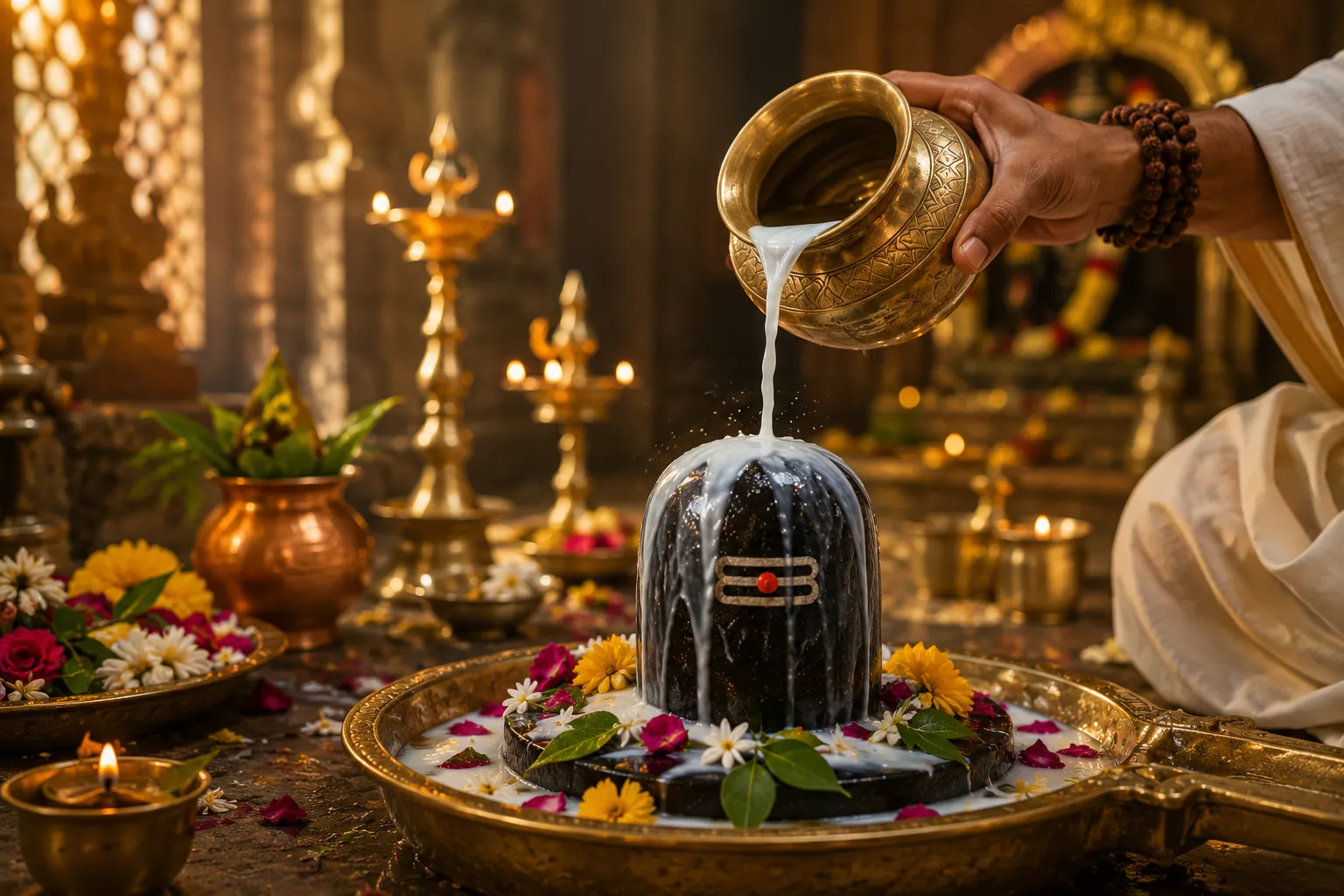
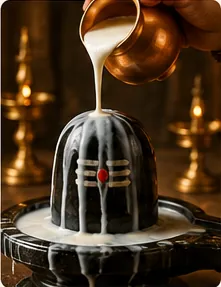
Milk abhishek being poured over a Shiva Lingam in warm light
Dedicated to
Lord Shiva
Performed for
Peace & purification
Duration
2–3 hours
Occasions
Shravan · Mondays · Maha­shivratri
Primary ritual
Abhishek of the Lingam
Offerings
Water, milk, honey, Bel Patra
Mantras
Rudram · Maha­mrityunjaya

What is Rudrabhishek Pooja?

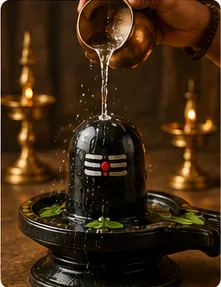
Rudrabhishek is one of the most revered rituals in the Shaiva tradition. At its heart is the abhishek — the ceremonial bathing of the Shiva Lingam with water, milk, curd, honey, ghee and sugar — performed while verses of the Rudram, a hymn from the Yajurveda, are recited. Each offering is poured slowly and deliberately, so the ritual unfolds as a continuous act of attention rather than a sequence of gestures.

Devotees perform Rudrabhishek to honour Shiva in his Rudra form, traditionally on Mondays, through the month of Shravan, on Pradosh, and on Maha­shivratri. Families also choose it around significant moments — a new beginning, a prayer for health, or simply sustained devotion. The ritual can be performed at a temple, at home, or, increasingly, with the family joining remotely while the sankalp is taken in their name.

Rudra represents a powerful form of Shiva, while Abhishek refers to the ceremonial bathing of the deity.

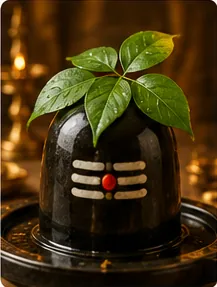
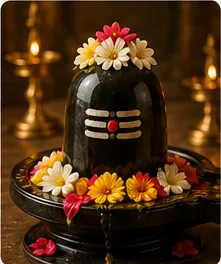
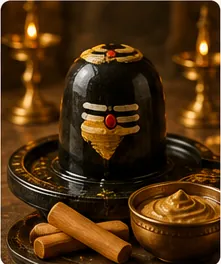
Shiva Lingam adorned with bel patra and flowers

What does Rudrabhishek mean?

रुद्र
Rudra

A fierce and compassionate Vedic form of Shiva — the remover of suffering, invoked in the Rudram hymn.

अभिषेक
Abhishek

The act of ceremonial bathing — sacred offerings poured over the deity as an expression of reverence.

रुद्राभिषेक
Rudrabhishek

The ceremonial bathing of Shiva in his Rudra form, accompanied by Vedic recitation — devotion given physical form.

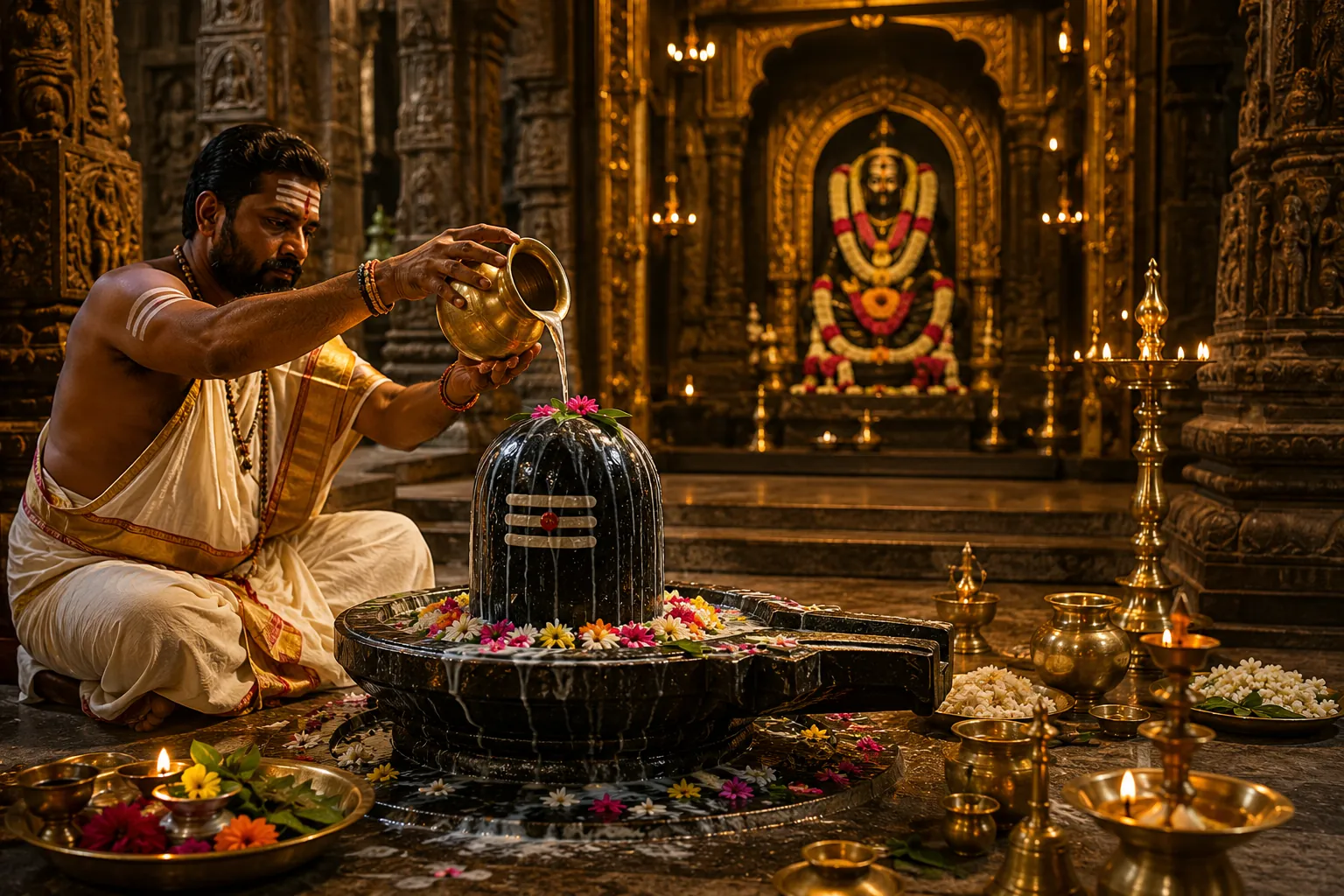
Ancient Shiva temple corridor in early morning light

The story and origin of Rudrabhishek

The roots of Rudrabhishek reach back to the Yajurveda, whose Sri Rudram hymn addresses Shiva as Rudra in one hundred names — fierce and gentle, destroyer and healer. Reciting the Rudram while bathing the Lingam is described in tradition as one of the highest forms of Shiva worship.

Puranic stories tell of gods and sages performing abhishek to please Shiva — most famously during the Samudra Manthan, when Shiva drank the poison halahala and devotees poured cooling water over him in gratitude. That gesture of cooling and thanksgiving survives in every Rudrabhishek performed today.

Over centuries the ritual travelled from Vedic fire halls to temple sanctums to family homes, absorbing regional traditions along the way — yet its essential grammar, offering and recitation, has remained unchanged.
Why is Rudrabhishek performed?

Devotees perform Rudrabhishek seeking peace of mind, spiritual wellbeing and a closer connection with Shiva. According to Hindu tradition, the ritual is traditionally believed to calm the mind, purify the home and mark important life moments with devotion — which is why families often choose it during Shravan, on Mondays, or when beginning something significant.

Spiritual

A deeply meditative experience — the rhythm of the Rudram and the slow pouring of offerings draw the whole family into stillness and devotion.

Traditional beliefs

Traditionally associated with relief from doshas, protection from negativity, and the blessings of health and harmony — always understood as prayer, never as guarantee.

Family & life

Chosen around new homes, anniversaries, recoveries and beginnings — a way for a family to pause together and mark a moment properly.

Different types of Rudrabhishek

Jalabhishek
Offering · Water

The simplest and most widely performed form — pure water or Ganga jal, offered daily or on Mondays.

Dugdhabhishek
Offering · Milk

Milk abhishek, traditionally associated with peace of mind and performed often through Shravan.

Panchamrit Abhishek
Offering · Five nectars

Milk, curd, honey, ghee and sugar offered in sequence — the classic form for festivals and sankalp poojas.

Rudrabhishek with Havan
Offering · Fire ritual

The abhishek followed by a fire ceremony — chosen for major occasions like Maha­shivratri or a family sankalp.

The offerings and what they represent

Each substance poured over the Lingam carries its own traditional meaning — together they form the vocabulary of the ritual.

WaterPurity and the cooling of Rudra's intensity
MilkNourishment and peace of mind
CurdStrength and wellbeing for the family
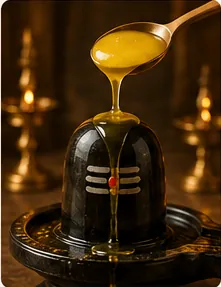
HoneySweetness of speech and relationships
GheeVitality and the steady flame of devotion
Bel PatraShiva's most beloved offering — three leaves as his three eyes
FlowersBeauty offered back to its source
SandalwoodCoolness, fragrance and calm

How Rudrabhishek Pooja is performed

The vidhi below follows the sequence most commonly observed. Your pandit ji may adapt it to your family's tradition and sankalp.

01

Preparation

The space is cleaned, the chowki and Lingam arranged, and the samagri laid out. The family bathes and dresses in fresh clothes.

02

Sankalp

The intention of the pooja is declared — your name, gotra, place and purpose — binding the ritual to your family.

03

Ganesh Pooja

Lord Ganesh is invoked first, as in every Vedic ritual, so the pooja proceeds without obstacles.

04

Kalash Sthapana

The sacred kalash is established with water, mango leaves and coconut, invoking the presence of the divine.

05

Invocation of Lord Shiva

Shiva is invoked into the Lingam with dhyana and mantra, and offered the first upacharas of welcome.

06

Rudrabhishek

The heart of the ritual — water, milk, curd, honey, ghee and sugar are poured over the Lingam in sequence, each with its mantra, ending with a bath of pure water and adornment with bel patra and flowers.

07

Rudram & mantra recitation

The Sri Rudram is recited through the abhishek, alongside the Maha­mrityunjaya and Panchakshara mantras.

08

Aarti

The lamp is circled before the deity as the family sings the aarti together — the ritual's emotional summit.

09

Prasad

The blessed offerings are shared among everyone present, carrying the pooja's grace into the household.

The exact sequence may vary by region and family tradition; GetMyPooja's ritual outlines are reviewed by qualified pandits.

Rudrabhishek Pooja Samagri

Print samagri list →

For Abhishek

  • Water / Ganga jal
  • Milk
  • Curd
  • Honey
  • Ghee
  • Sugar

Sacred offerings

  • Bel Patra
  • Flowers
  • Sandalwood paste
  • Akshat (rice)
  • Fruits

Pooja essentials

  • Diya & cotton wicks
  • Incense
  • Kalash
  • Camphor
  • Panchpatra & spoon

When you book through GetMyPooja, the complete itemised samagri kit is included — nothing to shop for.

When is the best time to perform Rudrabhishek?

Mondays

Somvar is Shiva's own day — the most common choice for a family Rudrabhishek.

Shravan

The holiest month for Shiva worship — every day auspicious, Shravan Mondays most of all.

Maha­shivratri

The great night of Shiva, when Rudrabhishek is performed through the night watches.

Pradosh

The thirteenth tithi's twilight window, observed twice each lunar month.

Personal muhurat

For a specific sankalp, the muhurat is chosen for your purpose and family tradition.

Today's Panchang → Shravan Calendar → Maha­shivratri → Upcoming Auspicious Dates →
The sacred month

Rudrabhishek during Shravan

Shravan, the monsoon month, is held to be dearest to Shiva — tradition places the Samudra Manthan and Shiva's drinking of the halahala in this month, which is why devotees offer cooling abhishek throughout it. Shravan Mondays (Shravan Somvar) are observed with fasting, temple visits and Rudrabhishek at home; many families keep the ritual every Monday of the month.

Explore Shravan →
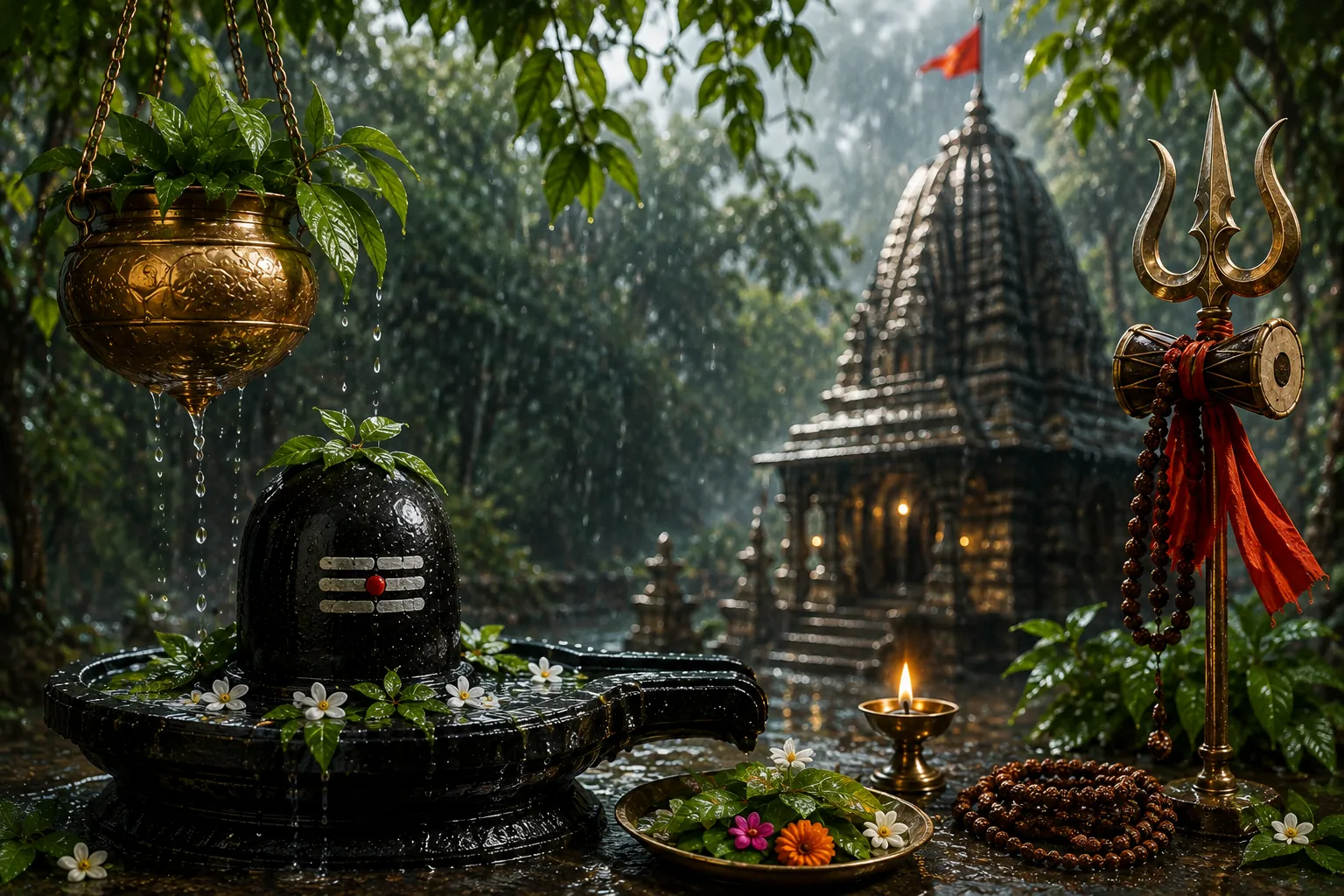
Devotees offering water at a Shiva temple in the rain

Mantras recited during Rudrabhishek

Panchakshara Mantra
ॐ नमः शिवाय
Om Namah Shivaya

"I bow to Shiva." The five-syllable heart of all Shiva worship — recited throughout the abhishek and in daily japa.

Maha­mrityunjaya Mantra
ॐ त्र्यम्बकं यजामहे सुगन्धिं पुष्टिवर्धनम्।
उर्वारुकमिव बन्धनान्मृत्योर्मुक्षीय मामृतात्॥
Om Tryambakam Yajamahe…

The "great death-conquering" mantra from the Rig Veda — a prayer for health and liberation, recited during the abhishek and for wellbeing sankalps.

Sri Rudram
ॐ नमो भगवते रुद्राय॥
Namakam & Chamakam, Yajurveda

The central recitation of Rudrabhishek — the Namakam salutes Rudra in his hundred forms while the Chamakam prays for life's blessings.

How long does Rudrabhishek take?

A standard Rudrabhishek takes 2–3 hours. The duration grows with the number of Rudram recitations (one, eleven — Ekadash Rudri — or more), the number of pandits, and whether a havan follows the abhishek.

  • Simple abhishek with one Rudri≈ 1.5–2 hrs
  • Standard Rudrabhishek≈ 2–3 hrs
  • Ekadash Rudri with havan≈ 4–5 hrs

How much does Rudrabhishek Pooja cost?

The cost of a Rudrabhishek depends on a few clear factors rather than a fixed rate: the pandit's dakshina, the number of pandits (one for a standard abhishek, two or more for Ekadash Rudri), the samagri, whether a havan is included, and the location and travel involved. A temple arrangement and a home ceremony are also priced differently.

Whatever the arrangement, ask for one itemised price before confirming — that is the standard GetMyPooja holds every booking to. Book Rudrabhishek Pooja at Home →

Can Rudrabhishek be performed at home?

Yes — a home Rudrabhishek is both traditional and practical. You need a clean, quiet space for the chowki, a Shiva Lingam (a small one is perfectly appropriate; your pandit can bring one if the family doesn't keep one), the samagri, and about three hours. The whole family can participate: pouring offerings, repeating the sankalp, joining the aarti. Mornings are preferred, and Mondays most of all.

Planning a Rudrabhishek at home?

GetMyPooja can help you arrange the Pooja with an experienced Pandit and guide you through the preparations.

Book Rudrabhishek Pooja at Home → Soon

Can Rudrabhishek be performed online?

Yes. In an online Rudrabhishek, the pandit performs the full ritual — often at a temple or a consecrated space — while you join live on video. The sankalp is taken in your name, gotra and location, which is what the shastras ask for; you witness each offering, join the aarti from wherever you are, and the prasad is couriered to your door. It differs from a home pooja only in presence, not in completeness — which is why it has become the natural choice for families abroad.

Prefer to participate remotely?

Explore how an online Rudrabhishek works and participate in the ritual wherever you are.

Book Rudrabhishek Pooja Online → Soon

How to prepare for Rudrabhishek

  • ◆The space — clean the pooja area the previous evening; a low table or chowki facing east works well.
  • ◆Yourself — bathe before the pooja and wear fresh, traditional clothes; light colours are customary.
  • ◆Samagri — lay everything out beforehand so the ritual flows without interruption (or let your booking include the kit).
  • ◆The family — decide who takes the sankalp; children are welcome throughout the ritual.
  • ◆Food — many families keep a light sattvik meal or a fast until the aarti, where tradition suggests it.

Things to keep in mind

Traditions vary — between regions, between families, even between temples in the same city. None of that variation should worry you. What matters is the sankalp made sincerely and the ritual performed attentively.

Tulsi leaves are traditionally not offered to Shiva, and offerings once poured are not reused — your pandit will guide these details gently. If something is unavailable, tradition itself provides substitutes; water offered with devotion is held complete in itself.

Clarity over fear. Understanding over superstition. Tradition without sensationalism.

Frequently asked questions

Which day is best for Rudrabhishek?

Mondays are traditional, Shravan Mondays especially; Maha­shivratri and Pradosh are also held highly auspicious. For a specific sankalp, a personal muhurat can be chosen.

Can Rudrabhishek be performed at home?

Yes — with a clean space, a Shiva Lingam, the samagri and a pandit, a home Rudrabhishek is fully traditional. The family participates throughout.

Can Rudrabhishek be performed online?

Yes — the sankalp is taken in your name and gotra, you join the full ritual live on video, and prasad is couriered to you.

Is fasting required?

Not required — many families keep a light sattvik meal or fast until the aarti where their tradition suggests it. Your pandit can advise for your occasion.

Can couples and families participate together?

Yes — Rudrabhishek is very much a family ritual. Couples often take the sankalp together, and everyone present joins the offerings and aarti.

What is the difference between Rudrabhishek and Shiv Pooja?

Shiv Pooja is the broader worship of Shiva with upacharas; Rudrabhishek is the specific ceremonial bathing of the Lingam with Vedic Rudram recitation — longer, more elaborate, and usually performed with a pandit.

How much does Rudrabhishek cost?

It varies with dakshina, number of pandits, samagri, havan and location — see the cost section above. Always ask for one itemised price before confirming.

Written by
GetMyPooja Editorial Team
Reviewed by
Pandit [Name] · Vedic Practitioner, 25+ years, Shiva Poojas
Last reviewed
August 2026
Editorial PolicySources & References
Perform this Pooja

Ready to perform Rudrabhishek?

Choose how you would like to experience the Pooja.

At your home

Rudrabhishek Pooja at Home

Perform Rudrabhishek at your home with an experienced Pandit, with guidance around the ritual, samagri and appropriate timing.

Book Rudrabhishek Pooja at Home → Soon
Online

Rudrabhishek Pooja Online

Participate in Rudrabhishek remotely, with Sankalp performed in your name and the ability to join the Pooja online.

Book Rudrabhishek Pooja Online → Soon